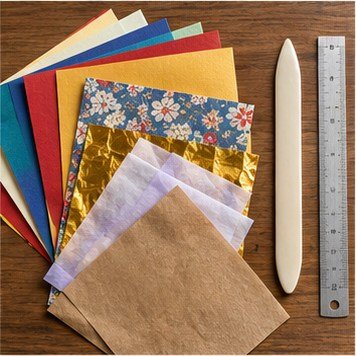
Tools are simple: a clean tabletop, a ruler for preparing squares, and a folding tool if you like sharper creases. Scissors may help cut a square from a larger sheet, but many origami traditions emphasize folding from a single uncut sheet. Follow the project instructions and respect the designer’s stated materials.
Paper changes the character of a model. A thin sheet makes many layers easier to manage, while a heavier sheet can hold a broad shape or stand on its own. Color, texture, grain, and how the paper holds a crease all affect the finished result. Starting with a basic square pack lets you learn before investing in specialty papers.
Square size and proportion
A familiar starter size is a square around six inches, though models can call for much larger or smaller paper. The dimensions affect the final model and the difficulty of handling small flaps. Cut carefully when a project requires a square, and avoid using a slightly uneven sheet for a design that depends on symmetry.
Match weight to complexity
Lightweight paper is easier to fold through many layers, while thicker paper can resist fine points and tight collapses. Try a model with ordinary kami, then compare the same folds with a larger or thinner sheet. Tissue foil and double-sided papers offer different effects, but they may crease or tear differently.
Store paper with care
Keep unused sheets flat, dry, and away from direct sun. Handle metallic or textured paper with clean hands to avoid fingerprints and surface damage. If you are folding for a display or class, test one sheet first so you know how the material behaves before preparing a whole batch.