You can explore these ideas without advanced mathematics. Fold a square along its diagonals and midlines, then observe where the creases intersect. Compare repeated units, rotate a sheet, or look at how a pattern changes when the paper is unfolded. Careful observation often comes before formal proof.
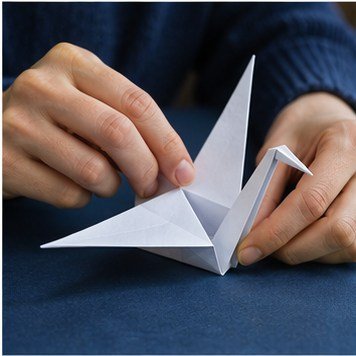
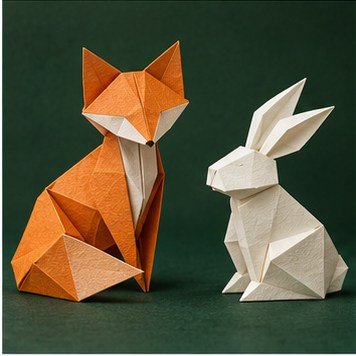
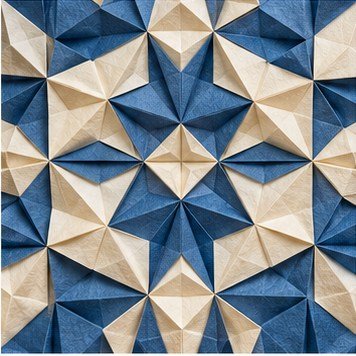
Origami connects visual art with geometry. A fold creates an angle, divides a region, or changes how layers meet. Repeated folds can reveal symmetry and proportion, while tessellations use repeating units to cover a surface with a regular or deliberately varied pattern.
Notice symmetry and angles
Many beginner models rely on mirror symmetry: one side reflects the other across a crease. Try folding the paper in half and checking whether key points align. For a more advanced study, compare the angles formed when several creases meet and notice which combinations allow a flat-folded result.
Read a crease pattern
A crease pattern records fold lines on an unfolded sheet. It does not always tell you the order of steps, so understanding mountains, valleys, layers, and reference points matters. Begin with a simple model whose finished shape you know, then match its folds back to the flat pattern.
Explore tessellations slowly
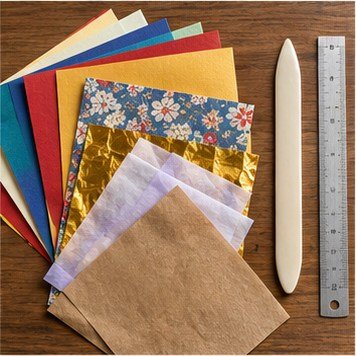
Repeating designs can be built from grids, polygons, or curved arrangements. Start with a small section and test the paper’s thickness before extending the pattern. Dense folds create many layers, so larger thin paper may be easier to handle than a small heavy sheet.