A gallery can be a classroom shelf or a public exhibit; in either setting, presentation helps viewers slow down and observe the work.
Origami is both a learning practice and an art form. A folded sheet can become a small object for the hand, a modular sculpture for a room, or a large installation suspended overhead. Scale, color, repetition, and the way light touches a crease all shape how a viewer experiences the work. Looking closely at finished models can help folders notice choices in structure and presentation that are easy to miss while following a sequence.
Look beyond the subject
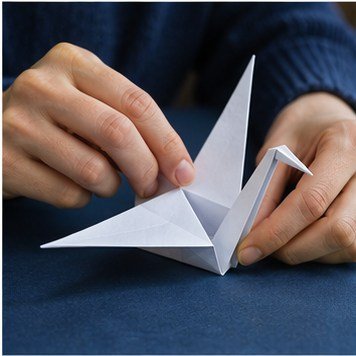
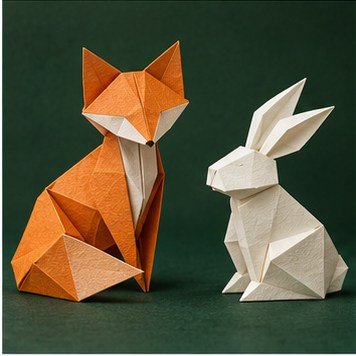
When viewing an origami piece, notice the direction of the folds, the paper surface, the balance of positive and negative space, and the way the model stands or hangs. These choices reveal the maker’s decisions even when you do not know the folding sequence.
Display with care
Paper can fade, crease, and react to humidity or handling. Use stable supports and avoid strong direct sunlight. A display label can identify the artist, title, materials, date, and any handling guidance. For valuable or fragile works, consult a collections professional about conservation and mounting.
Give credit to designers
Many models are created by named designers and shared through books, diagrams, classes, or online publications. Follow the creator’s usage terms when reproducing instructions, teaching a model publicly, or posting photographs. Acknowledging design authorship is part of a respectful folding community.