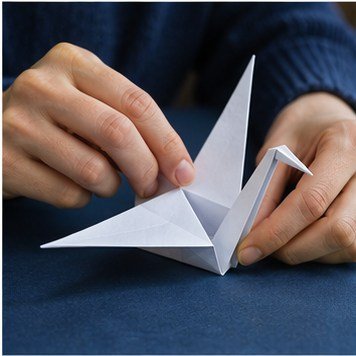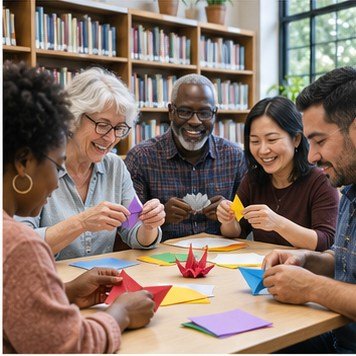
A group can be informal and still make newcomers feel welcome by sharing simple supplies and showing each step at a comfortable pace.
Community folding can happen in a library, school, arts center, museum, or living room. Groups meet to learn a new model, share paper, exchange ideas, or work on a collaborative installation. The activity is flexible: people can arrive as beginners, experienced folders, teachers, artists, or curious neighbors. Regular gatherings can create a low-pressure place to practice, ask questions, and see how a familiar model changes in different hands.
Start with a welcoming format
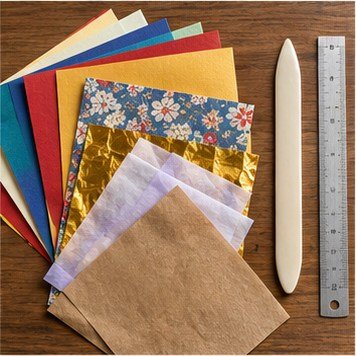
Choose an accessible space, set out a few paper sizes, and pick one approachable model for the first gathering. Let people know whether supplies are provided and how long the session will run. A relaxed open table can work just as well as a formal lesson when expectations are clear.
Share knowledge generously
Experienced folders can demonstrate a technique, but leave room for participants to discover their own approach. Ask before unfolding someone else’s model or photographing their work. If a design has a creator or publication source, keep attribution attached when sharing instructions.
Build a local folding rhythm
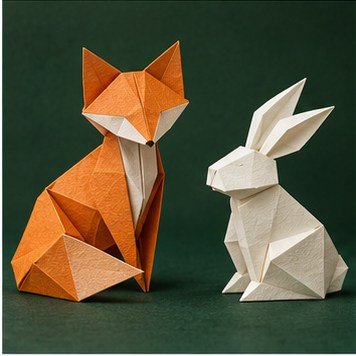
A monthly meetup can keep a group active without requiring elaborate planning. Rotate between themes such as animals, geometry, seasonal decorations, or modular builds. Libraries and community centers may offer meeting rooms; check each organization’s own policies before scheduling a public event.