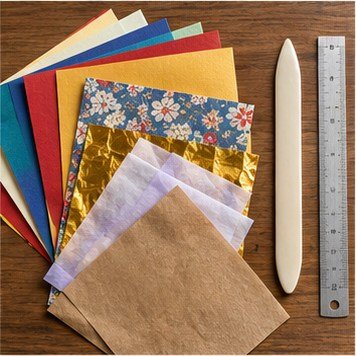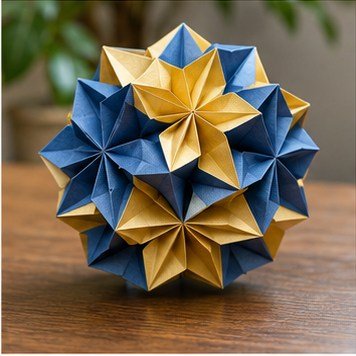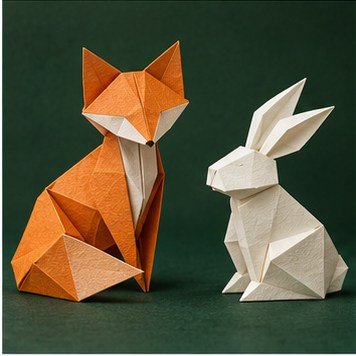
Nature models also invite interpretation. Two people can fold the same design with different paper and create objects that feel entirely their own. Choose colors that help explain the shape, or experiment with patterned paper to discover which details disappear and which become more expressive.
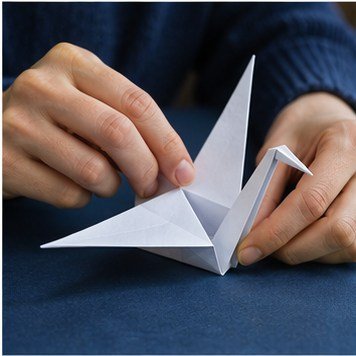
Animal models are a welcoming way to explore how a few folds can suggest movement, posture, or a recognizable silhouette. A traditional crane introduces symmetry and layered points; other designs can become insects, mammals, fish, leaves, and flowers. Every model asks you to notice a different relationship between crease and form.
Read the silhouette
Before folding, look at a finished example and identify its largest shapes: body, wings, head, or tail. These landmarks help you understand why a step matters. When instructions ask for a squash, sink, or reverse fold, the goal is to reshape a layer in a controlled direction, not simply press it flat.
Build a sequence of skills
Start with models that use valley and mountain folds, then move to designs with inside and outside reverse folds. Each new technique is easier when the paper is large enough to handle. Keep a note of unfamiliar symbols and practice the movement on a spare square.
Respect living things in the design
Origami animals are art, not substitutes for wildlife or natural materials. Use the model to spark curiosity about habitats, patterns, and observation. In a classroom or family activity, invite folders to describe the details they chose rather than expecting every model to look identical.